Travel guide

How to avoid traveler’s diarrhea.

Traveler's diarrhea or tourista is an acute diarrhea that affects a large number of travelers. It is said that between 60 and 80% of travelers in tropical, subtropical and developing regions are affected by this distressing gastroenteritis. Although the risk is higher in these areas, the World Health Organization (WHO) reminds us that hygiene can be poor anywhere, so it's best to take precautions.

Probaclac Travelers
Probaclac Travelers
6080 % of travelers in tropical, subtropical and developing regions are affected by this distressing gastroenteritis.
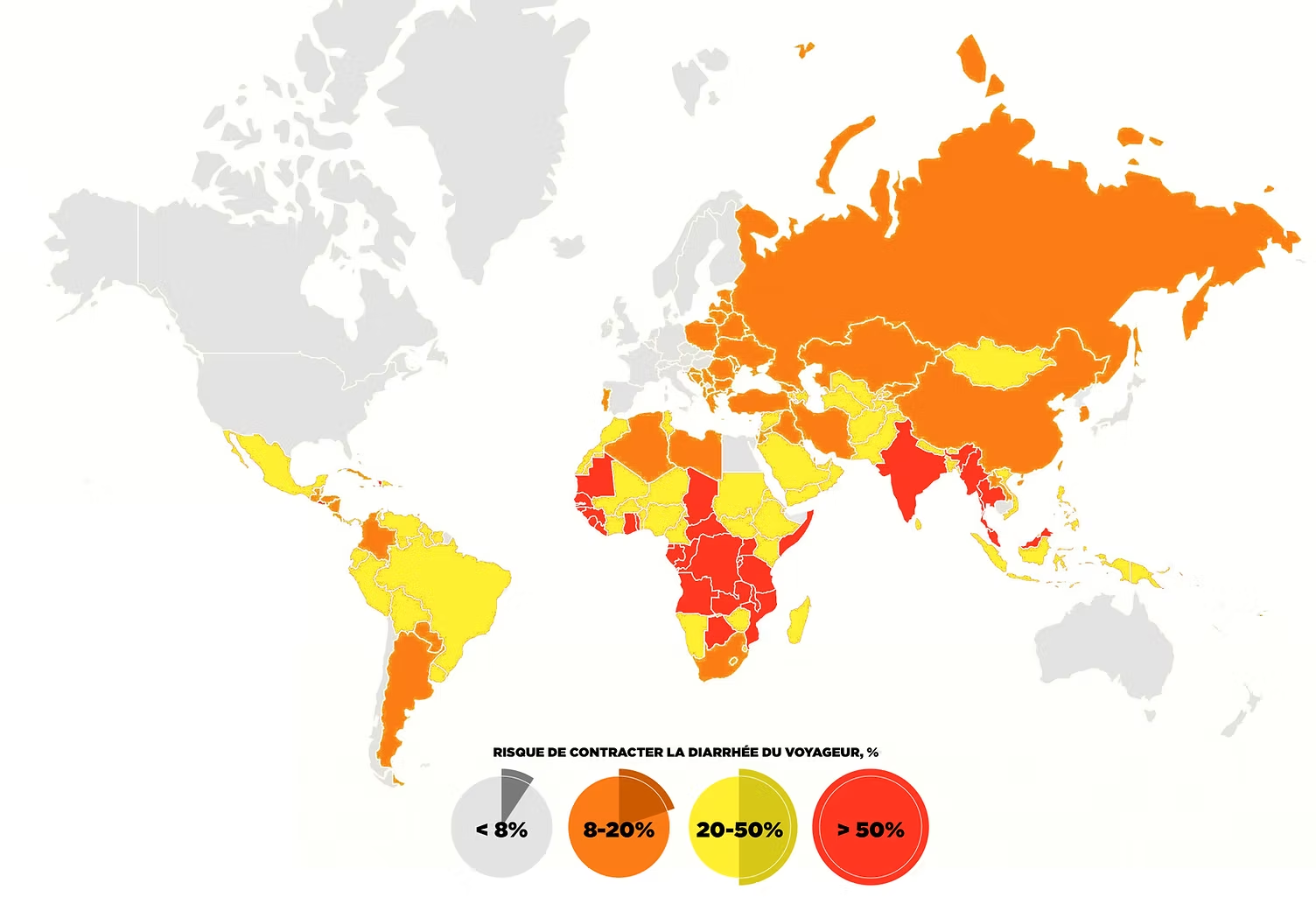
Risk zones

Where is the risk of catching tourista?

The risk is higher in tropical, subtropical and developing regions — but no destination is entirely safe.

Carte mondiale des zones à risque de diarrhée du voyageur
Low risk
Moderate risk
High risk
Very high risk
Prevention

Tips to avoid diarrhea while traveling.

Be careful with everything you consume: food or drink.

Beware of tap water, ice cubes, and all frozen smoothies

01

Avoid street food

02

Make sure food is cooked thoroughly

03

Avoid seafood

04

Be careful with fresh fruits and vegetables (salads), opt for foods that can be peeled (e.g. bananas)

05

Avoid dairy-based foods

06

Avoid eggs

07
Symptoms

What are the symptoms of traveler’s diarrhea?

Tourista usually appears within the first 3 to 5 days of the stay. It most often presents as watery diarrhea without fever or blood.

  • Diarrhea
  • Abdominal cramps
  • Nausea and vomiting 1 in 10 cases
  • Fever 1 in 10 cases
  • General discomfort
  • Signs of dehydration
Causes

What causes traveler’s diarrhea?

More often of bacterial origin than parasitic or resulting from a virus, its transmission is by the oral-fecal route. A number of bacteria are responsible for contamination, the best known and most frequent is undoubtedly enterotoxigenic Escherichia coli also known by its abbreviated form of E. coli.

The mechanism of action of the E. coli bacteria is the production of an enterotoxin (a toxic substance that targets the intestines) which causes a flow of water and electrolytes into the intestinal lumen, resulting in softening of the stool and diarrhea.

Other bacteria that cause this condition include Salmonella, Shigella, and Campylobacter. The disease can also sometimes be caused, although less often, by parasites such as Giardia, Cryptosporidium, Cyclospora, or by viruses such as rotavirus or norovirus.

“Cook food, boil it, peel it or not eat it.”

World Health Organization
Prevention methods

Probiotics or oral vaccines?

Two preventive approaches exist. Here’s how they compare, point by point.

Probiotics
Oral vaccines
How often to take?
Take one week before departure, during the stay, and one week after returning
Take 2 doses 1 week apart no later than 2 weeks before departure
Requires a prescription?
No
No, but must be recommended with the Quebec immunization protocol with consultation of a health professional. No for residents of other provinces
Who are these prevention methods aimed at?
Adolescents (12 years and older) and Adults. Children's formulas are recommended for ages 1 to 3 and ages 3 and up.
Adults and children aged 2 years and over
Kept in the refrigerator?
No, does not require refrigeration
Yes, requires refrigeration
Possible side effects
Possibility of bloating and gas at the beginning of consumption
Possibility of abdominal pain, diarrhea, nausea, vomiting, fever
Hygiene first

Prevention is better than cure.

The infection can be transmitted from person to person. Four habits to keep throughout your stay.

01

Wash your hands with soap

02

Brushing your teeth with bottled water

03

Taking care of your immune system

04

Make sure you get adequate sleep

Probaclac Travelers
Prevention in a capsule

Probaclac Travelers.

Targeted protection against traveler's diarrhea — start one week before departure, continue during your stay and one week after your return.

  • 9 probiotic strains + vitamin C
  • No refrigeration required
  • No prescription needed
  • 30- and 60-capsule formats · 2 per day